
Are you tired of the same old treadmill or elliptical workouts? Want a challenge that pushes your limits and gives real results?
Imagine transforming your routine in just minutes with ski erg!. It can burn calories, build strength, and take your fitness to new levels. Let’s explore how it compares to other cardio machines and how to get the most out of it.
When I first tried the ski erg, I was a bit scared. The motion was new, and I thought it wouldn’t be as intense as my usual workouts. But, within minutes, my heart was racing, and I was sweating a lot as I moved through each stroke.
The ski erg mainly works your upper body and core, unlike cycling, which focuses more on your legs. It offers a full-body challenge that can boost your fitness in amazing ways.
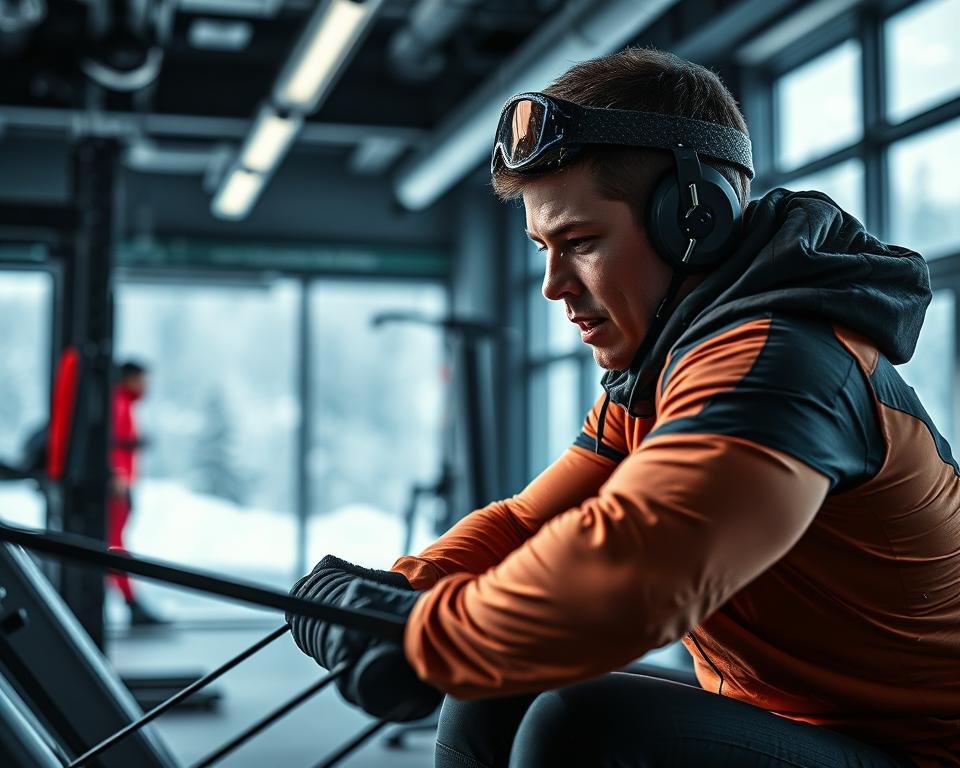
To get the most out of the ski erg, focus on proper technique and intensity. Featuring an intuitive tracking system and customizable resistance, the ski erg tailors every session to your unique fitness goals. Whether you’re easing into a warm-up or igniting an all-out HIIT session, the ski erg seamlessly adapts to match your desired intensity.
Incorporating HIIT into your ski erg sessions can help you burn significantly more calories in less time compared to steady-state cardio. By mixing intense bursts with brief recovery periods, you can maximize calorie burn and cardiovascular efficiency. Plus, the ski erg is engineered for every fitness level – from beginners embarking on their first journey to elite athletes seeking a new challenge.
Your Fitness Revolution Starts Here: Key Takeaways
- The ski erg is a full-body cardio machine that engages the upper body and core more than other popular options like the treadmill or elliptical.
- Adjusting the damper setting allows you to dial in the perfect resistance level to challenge yourself and push your limits.
- Incorporating the ski erg into high-intensity interval training (HIIT) workouts can deliver impressive calorie-burning results in a fraction of the time.
- The ski erg offers a unique workout experience that can add variety and excitement to your fitness routine.
- Proper technique and body positioning are key to maximizing the benefits of the ski erg and avoiding common mistakes.
Are you ready to revolutionize your fitness journey? Embrace the challenge, ignite your calorie burn, and transform your body – the time to start is now.
What is a Ski Erg? A Machine That’s Redefining Cardio.
The ski erg is a versatile exercise machine that mimics Nordic skiing. It’s a high-intensity cardio powerhouse that simultaneously targets your upper body, core, and lower body. Unlike other machines, it lets you move like you’re skiing, making it perfect for ski erg workouts.
Powered by a flywheel or fan, the ski erg monitors your energy expenditure and helps you optimize workout efficiency. When you pull the handles, the flywheel or fan spins, creating resistance. The harder you pull, the faster it spins, making the workout tougher. You can adjust the damper to change the resistance, fitting the workout to your level and goals.
Experience the Thrill of Nordic Skiing at Home
The ski erg mimics cross-country skiing, giving you a low-impact workout that targets your whole body. This makes it great for athletes and fitness lovers alike.
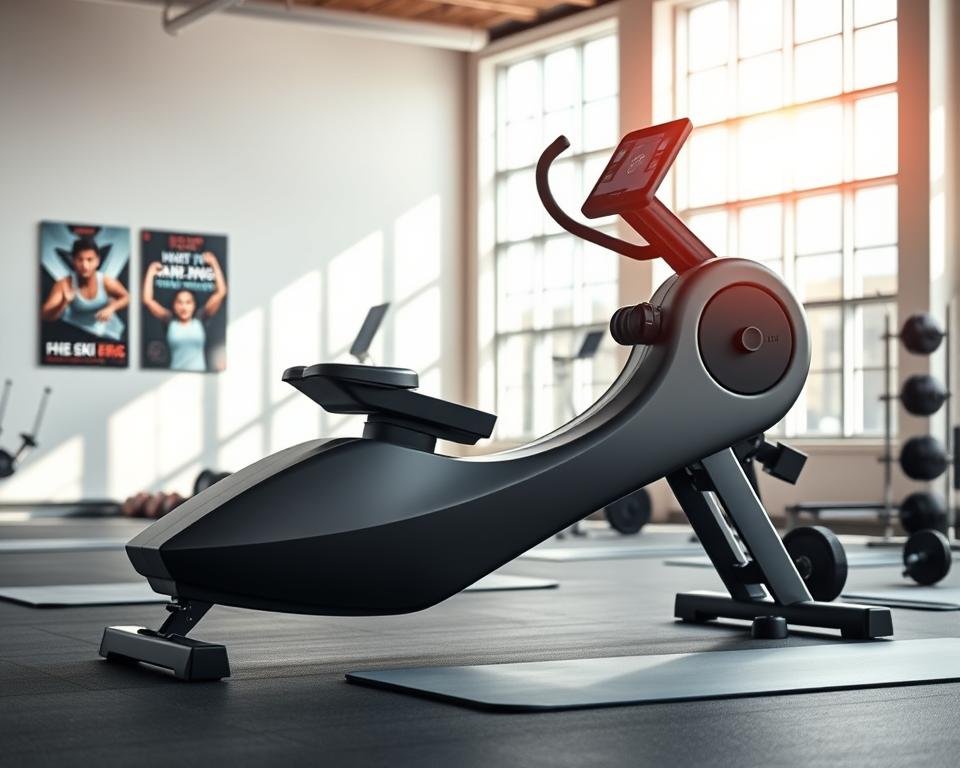
Harness the versatility of the ski erg – perfect for explosive sprints, endurance sessions, and active recovery workouts alike, making it your go-to tool for conquering any training goal
Efficiency and Technique on the Ski Erg
Getting the right body position and technique is crucial for maximizing your workout results and minimizing injury risk. You should keep your arms slightly bent at the top of the stroke. Use a 90-degree elbow angle during the pull and finish with your triceps to add power. Also, changing the damper setting can change how hard the workout is. Lighter athletes might prefer a lower setting, while heavier ones can handle a higher one.
Proper Body Positioning for Maximum Power Transfer
To transfer power effectively, keep your body angles close and use techniques like triple extension. The ski erg works your whole body, like GHD sit-ups or med ball slams. This full-body movement helps with powerful actions like ball slams.
Adjusting the Damper Setting for Intensity
The damper setting on the ski erg, from 1 to 10, controls air flow and workout intensity. Lower settings are good for aerobic workouts, while higher ones are for strength training in skiing. Try different damper settings to find the right resistance for your goals.
Avoiding Common Technique Flaws
Avoid common mistakes such as pulling with straight arms, cutting your stroke short, or over-squatting. Focus on a fluid, controlled movement and impeccable form to maximize the effectiveness of your workout.
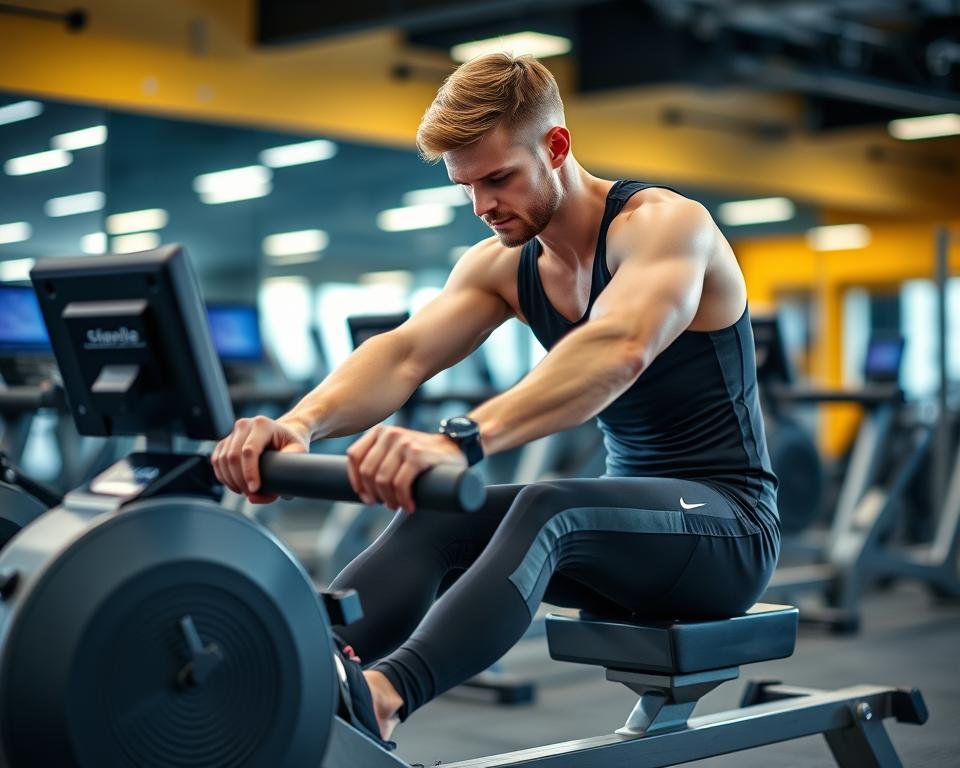
By mastering body positioning, fine-tuning damper settings, and sidestepping common technique errors, you’ll unlock a full-body workout that not only delivers maximum results but also minimizes injury risk.
Benefits of Ski Erg Exercise
Adding the Ski Erg to your fitness routine offers many advantages. This machine helps you burn calories and works many muscles, boosting strength, endurance, and heart health.
High-intensity ski erg workouts can burn approximately 12–15 calories per minute at peak effort, which translates to roughly 300–400 calories in a 30-minute session. Actual calorie burn will vary depending on body weight, age, fitness level, and effort intensity. It works your whole body, including your arms, back, abs, and legs, which can support fat loss and help tone your body over time.
The Ski Erg is also great for your heart. It raises your heart rate and works many muscles at once. Unlike pounding treadmills, the Ski Erg’s fluid motion is gentler on joints, making it suitable for those in rehabilitation or with joint concerns. Plus, it helps improve your hip movement, reducing injury risks.
Whether you’re into fitness, sports, or just want to stay healthy, the Ski Erg is great. It’s a full-body, intense workout that targets many muscles and is a key tool for better fitness and health.
Setting Up for a Ski Erg Session
Getting the right setup and body position is key. Stand at the back of the base with your feet shoulder-width apart. Reach out to grab the handles.
Try to push down on the handles while moving your hips back and bending your knees a bit. Keeping tension in both the downward pull and the reset is vital for smooth movement.
When starting out, begin with a damper setting of three or lower. This helps avoid muscle fatigue and ensures you can finish the workout without strain. The Concept2 SkiErg shows the time to ski 500 meters, helping you track and boost your speed.
Maintaining proper form throughout your session not only prevents injuries but also boosts your workout’s effectiveness.
“Preparation should include mobility drills and warm-up routines focusing on shoulders, hips, ankles, core, and hamstring isometrics.”
By setting up correctly and focusing on your form, you’re ready for a tough and rewarding ski erg workout. It’s not just about how hard you work — it’s about doing it correctly.
The 15-Minute Fat-Inferno: A HIIT Ski Erg Routine
Want to burn calories fast and boost your heart health? Try high-intensity interval training (HIIT) with the Ski Erg. This workout involves short bursts of hard effort followed by rest or light activity. It’s all about giving your best during the hard parts and resting well in between.
Start with a damper setting at three or below on the ski erg machine. Aim to get faster at skiing 500 meters on the Concept2 SkiErg machine. The ski erg is great for both short sprints and longer, easier workouts. Try doing 30 seconds of skiing followed by 30 seconds of rest, repeating 5 to 20 times for the best results.
Here’s a high-intensity ski erg workout plan:
- Ignite your engine: Begin with 5-10 minutes of dynamic stretches and light skiing to prime your muscles.
- Do 8-10 rounds of 30 seconds of all-out skiing, then 30 seconds of rest or light activity.
- Keep repeating the 30-second cycle 5-20 times, based on your fitness level.
- End with 5 minutes of easy skiing or stretching to cool down.
Focus on giving your best effort during the hard skiing, and rest well in between. This intense method can help you burn more calories and boost your fitness more efficiently.
HIIT protocols are well-established for triggering the EPOC (Excess Post-Exercise Oxygen Consumption) effect, keeping your metabolism elevated for hours after your workout — a benefit recognized by the American College of Sports Medicine.
To make it even tougher, add bodyweight exercises during rest periods, or make the work and rest intervals longer. Try different routines to see what works best for you.
Always keep proper form and technique to maximize your ski erg workouts and avoid injuries. Enjoy the challenge and the benefits of this effective high-intensity training!
Ski Erg Workout Variations
The ski erg is super versatile, letting you do many different workouts. You can mix in bodyweight exercises, strength training with dumbbells or kettlebells, and even use it with other cardio machines. This keeps your workouts exciting and tough.
One effective way to use the ski erg is to focus on back-muscle engagement through controlled pulling movements. Make sure to use the right technique and damper setting for a great back workout with minimal strain.
Adding core stabilization exercises to your ski erg routine is another great idea. Try shoulder presses or planks between ski erg sets to target the core and lower body while getting a cardio boost.
Exploring different ski erg workouts is key to getting the most out of the machine. Find the ones that push you the hardest and match your fitness goals. This way, your workouts stay fun and you work all your muscles for a balanced fitness plan.
| Workout Variation | Description | Target Muscles |
|---|---|---|
| Back-Focused Session | Focus on proper technique and damper setting to engage the back muscles | Back, Lats |
| Core Circuit | Incorporate exercises like shoulder presses and planks to target the core and lower body | Abs, Core, Lower Body |
| Ski Erg + Other Cardio | Combine the ski erg with machines like the rower or assault bike for a high-intensity, full-body workout | Cardiovascular, Full Body |
By trying out different exercises and equipment, you can work different muscles and keep your workouts intense.
Ski Erg Workout Progression
Once you’ve mastered the basics, progressive overload is the key to continued improvement. You can do this by making the exercises more intense, longer, or more complex. Try adjusting the damper setting, increasing the work-to-rest ratios, or adding resistance band rows between intervals. This way, you’ll keep challenging yourself and see your fitness improve.
The Concept2 SkiErg display shows how long it takes to ski 500 meters. You aim to get faster over time. Keep an eye on your 500-meter pace, total time, and total meters during each workout. Changing your stroke rate can also improve your workout, with a slower rate for longer sessions and a faster rate for short, intense ones.
The ski erg is great for all levels and goals. By making your workouts more intense and complex, you’ll keep pushing yourself and reaching your fitness goals.
The Concept2 Million Meter Club is a great challenge for ski erg enthusiasts. By regularly using the ski erg and tracking your progress, you can work towards this prestigious award.
| Workout Type | Description | Benefit |
|---|---|---|
| Single Distance | Complete a set distance in a single, continuous effort. | Builds endurance and pacing skills. |
| Single Time | Ski for a set duration, aiming to cover the greatest distance possible. | Develops cardiovascular fitness and mental toughness. |
| Intervals | Alternate periods of high-intensity effort with periods of recovery. | Enhances anaerobic capacity and power. |
| Variable Intervals | Vary the work-to-rest ratios throughout the workout. | Challenges the body to adapt to changing demands. |
| Undefined Rest Intervals | Take rest breaks as needed, without a preset time frame. | Promotes self-awareness and pacing skills. |
Always track your ski erg performance with the ErgData app or other methods. This helps you see how you’re doing and make smart choices about your workouts. Also, adjust your workout schedule and intensity based on what you like and the seasons.
Combining Ski Erg with Other Training
Pairing the Ski Erg with complementary exercises is a smart strategy for building a more balanced and effective fitness routine. The Ski Erg is a great addition to your training as it helps work out different muscles and energy systems, making your overall approach more balanced and effective.
While the Ski Erg fires up your upper body and core, pairing it with push-ups or bent-over rows can help sculpt a balanced, full-body physique. To improve your posture, try bodyweight exercises in between Ski Erg intervals. Cycling and rowing can also boost your cardiovascular base.
Combining the Ski Erg with other training modalities — such as cycling, rowing, or resistance training — provides a more complete cardiovascular and muscular workout. The American College of Sports Medicine recommends combining aerobic and resistance training for optimal health and fitness outcomes.
Adding the Ski Erg to your routine makes your workouts more well-rounded. It helps with heart health, muscle strength, and power, making it a key tool in reaching your fitness goals and staying injury-free.
How to Stay Motivated with Your Ski Erg Routine
Staying consistent with any fitness routine takes planning and self-motivation. To stay on track with your ski erg training, set achievable goals and track your progress. Make your workouts fun by listening to music or competing with friends.
Pro tip: Start by setting small, specific targets — like shaving 5 seconds off your 500m time — to build momentum and keep improving. Using the Ski Erg’s performance monitor to track your metrics can help you stay accountable and see real progress over time.
Working out with friends adds a fun, social element that keeps you motivated. Lastly, always celebrate your achievements, no matter how small. Every milestone, like a new personal best or consistent workouts, deserves recognition. This positive feedback boosts your motivation and keeps you on track.
The Ski Erg complements rowing and cycling exercises, mainly working the upper body and core, with less involvement of the lats compared to rowing.
By setting goals, tracking your progress, and enjoying your workouts, you’ll stay motivated and make the most of your ski erg training.
Conclusion
The Ski Erg is a highly effective, full-body cardio machine that can transform your home gym or athletic training. It helps you burn calories efficiently through high-intensity interval training. By mastering the proper technique and adjusting the damper setting, you can improve strength, cardiovascular fitness, and upper body muscle tone.
It can become a valuable tool in your quest for optimal health and fitness. Whether you’re looking to complement your elliptical workout, stairmaster workout, or any other cardio routine, the ski erg offers a unique challenge that targets multiple muscle groups simultaneously.
With the ability to monitor your progress, you can fine-tune your technique and training approach to achieve your fitness goals. If you’re ready to take your cardio and strength training to the next level, consider the ski erg as a versatile and effective addition to your overall wellness routine.
References
- [1] CDC — Physical Activity Basics: How Much Physical Activity Do Adults Need?
- [2] American College of Sports Medicine — High-Intensity Interval Training
- [3] NIH MedlinePlus — Exercise and Physical Fitness
- [4] American Heart Association — Why Is Physical Activity So Important for Health and Well-Being?
Medical Disclaimer: This article is for informational purposes only and is not a substitute for professional medical advice, diagnosis, or treatment. Always consult a qualified healthcare provider before starting any new exercise program, especially if you have an existing health condition, joint concerns, or cardiovascular issues.
Frequently Asked Questions
What is a Ski Erg, and why is it effective for fitness?
The Ski Erg (short for Ski Ergometer) is a fitness machine popularized in CrossFit, HIIT workouts, and functional training programs. Designed to replicate the motion of Nordic skiing, it features a flywheel resistance system that engages your upper body, core, and legs simultaneously. Unlike traditional cardio machines, the Ski Erg emphasizes full-body engagement, making it ideal for torching calories, building strength and endurance, and improving cardiovascular health. Its low-impact design also reduces joint strain, appealing to athletes and fitness enthusiasts seeking efficient, high-intensity workouts.
How does the Ski Erg mechanism optimize calorie burn?
The Ski Erg’s dual-action flywheel or magnetic resistance system generates intensity based on your effort: the harder you pull the handles downward, the greater the resistance. Adjust the damper setting (1–10) to control airflow to the flywheel, altering the perceived difficulty. This creates a dynamic, scalable workout that boosts metabolic rate and EPOC (Excess Post-Exercise Oxygen Consumption), leading to sustained calorie burn. The machine’s real-time metrics (watts, calories, strokes/minute) let you track progress, making it perfect for HIIT sessions and goal-oriented training.
What’s the proper Ski Erg technique to maximize results and avoid injury?
Master these key form tips for optimal power output and injury prevention:
- Starting Position: Stand with feet shoulder-width apart, knees slightly bent, and grip handles overhead with arms slightly bent (avoid locking elbows).
- Pull Phase: Initiate the movement by driving through your lats and core, pulling handles downward while maintaining a 90-degree elbow bend. Engage your triceps at the bottom for maximum force.
- Recovery Phase: Control the return upward, keeping tension in your shoulders and core to maintain rhythm.
- Posture: Keep your spine neutral and avoid hunching — core stability is critical for power and posture.
What unique benefits do Ski Erg workouts offer compared to other cardio machines?
Ski Erg workouts deliver full-body conditioning with distinct advantages:
- High Calorie Burn: Estimated at approximately 12–20 calories per minute depending on effort and individual factors.
- Muscle Engagement: Targets back, shoulders, arms, core, and glutes for balanced strength.
- Low-Impact Cardio: Ideal for active recovery or joint-sensitive users.
- Postural Improvement: Strengthens posterior chain muscles to combat desk-related back pain.
- Versatility: Supports steady-state cardio, sprint intervals, or hybrid circuits with other equipment.
How can I use the Ski Erg for HIIT to accelerate fat loss?
Pair the Ski Erg with HIIT protocols for maximum calorie burn in minimal time:
- 30/30 Intervals: 30 seconds all-out sprint (90% effort) + 30 seconds rest. Repeat 10x.
- Pyramid Sets: Increase work intervals (20s, 40s, 60s) with equal rest, then descend.
- Tabata: 20s sprint + 10s rest for 8 rounds (4 minutes total). HIIT on the Ski Erg elevates EPOC, keeping your metabolism revved for hours post-workout.
How many calories does the SkiErg approximately burn?
Estimated SkiErg calorie burn ranges from approximately 12–20 calories per minute, depending on intensity, body weight, age, and fitness level. A person can burn roughly 300–400 calories in 30 minutes with high-intensity SkiErg workouts, though individual results will vary. Sprint intervals also trigger the afterburn (EPOC) effect, further enhancing total calorie burn post-workout. Track metrics via the Performance Monitor for the most accurate data for your session.
Is the SkiErg good for weight loss?
The SkiErg’s full-body metabolic conditioning makes it an effective tool for supporting weight loss goals when combined with a healthy diet and appropriate calorie balance. The CDC and NIH recommend pairing regular aerobic exercise with healthy eating for sustainable weight management. Combine SkiErg HIIT sessions (3–4x weekly) with sound nutrition to support a calorie deficit and target fat loss. Its low-impact design also supports sustainable, joint-friendly training over time.
What muscles does the SkiErg work?
The SkiErg primarily targets the upper body and core:
- Primary muscles: Lats, deltoids, triceps, core (rectus abdominis and obliques).
- Secondary muscles: Glutes, quads, hamstrings. It’s a posterior chain powerhouse, perfect for correcting desk-job posture and building upper-body pulling strength.
Will SkiErg build muscle?
While primarily cardio-focused, high-resistance SkiErg training (damper 7–10) can help build lean muscle in the shoulders, back, and arms over time. For greater upper-body hypertrophy, pair SkiErg sessions with dedicated weight training targeting the same muscle groups, such as pull-ups, rows, and shoulder presses.