
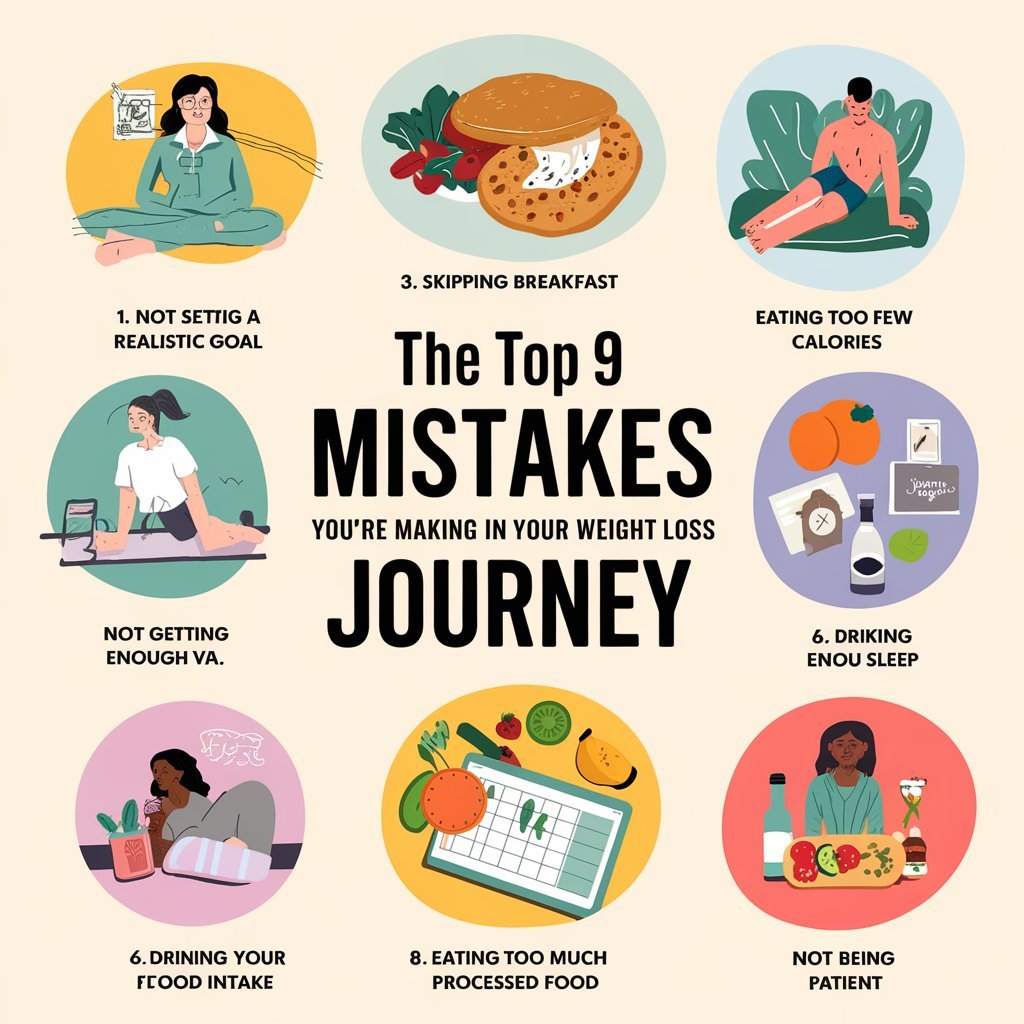
Let’s be real—if weight loss was easy, we’d all be experts at it. But the reality? It’s full of frustrating roadblocks, surprising setbacks, and sometimes it feels like you’re doing everything right… yet nothing is working. Could you be making one of these nine common mistakes that are derailing your weight loss journey without even realizing it? Spoiler: the answer is probably yes. The good news? We’re not just identifying the problems, we’re also giving you simple, science-backed solutions to fix them.
Mistake 1: Focusing Only on Cardio, Neglecting Strength Training
Let’s face it—cardio is the go-to exercise for most people trying to lose weight. And yes, it’s great for burning calories. But here’s the catch: focusing solely on cardio might be the very reason you’re hitting a plateau. If you’re spending hours on the treadmill but ignoring the weights, you’re missing out on a powerful fat-burning tool: strength training.
Why does this matter? Strength training builds muscle, and muscle tissue burns more calories than fat, even when you’re at rest. According to the American Heart Association, adding strength training to your routine increases lean muscle mass, which supports a higher resting metabolic rate and helps the body burn calories more efficiently over time [1].
The Fix: Add at least two to three strength training sessions to your weekly routine. Start with basic compound exercises like squats, deadlifts, and push-ups. Not only will you burn fat, but you’ll also build lean muscle, which shapes your body in a way cardio can’t. Remember, it’s not just about burning calories—it’s about building a body that burns calories efficiently.
Mistake 2: Underestimating the Importance of Nutrition
You’ve probably heard the saying, “You can’t out-exercise a bad diet.” Yet, many people continue to believe that if they hit the gym hard enough, it’ll cancel out poor food choices. But here’s the hard truth: nutrition plays a dominant role in weight loss. No matter how intense your workouts are, if your diet is loaded with excess calories, sugar, or processed foods, your progress will stall.
The CDC notes that creating a caloric deficit through dietary changes is generally more efficient than exercise alone for weight loss, as what we eat has a more direct impact on our daily caloric balance [3]. Consider this: a single slice of pizza can contain around 300 calories, but you’d need to run for roughly 30 minutes just to burn that off.
The Fix: Prioritize whole, nutrient-dense foods over processed options. Focus on lean proteins, healthy fats, and fiber-rich vegetables. Use a food tracking app to monitor your calorie intake, and aim for a calorie deficit of 500 to 1,000 calories per day for sustainable weight loss. When you eat mindfully and nourish your body, exercise becomes a way to enhance your progress—not a way to “make up” for dietary slip-ups.
Mistake 3: Skipping Meals to Save Calories
Skipping meals seems like an easy way to cut calories, right? Wrong. It might surprise you, but skipping meals often leads to the opposite effect. When you skip a meal, especially breakfast, your body goes into “survival mode,” slowing down your metabolism to conserve energy. By the time you eat, you’re likely to overcompensate, consuming more calories than you would have if you hadn’t skipped the meal in the first place.
Research suggests that meal-skipping can disrupt hunger hormones like ghrelin and leptin, leading to increased appetite and poorer food choices later in the day. The NHLBI recommends eating regular, balanced meals as part of a sustainable weight management approach [2].
The Fix: Eat regular, balanced meals that include protein, healthy fats, and complex carbohydrates with portion control. Instead of cutting out meals entirely, try reducing your portion sizes or swapping higher-calorie foods for lighter options. Eating smaller, more frequent meals can keep your metabolism steady and prevent the binge-restrict cycle that sabotages weight loss.
Mistake 4: Overlooking the Power of Sleep and Stress Management
You might be surprised to hear this, but one of the biggest factors in weight loss isn’t your diet or workout routine—it’s your sleep. Sleep is your body’s time to recover and regulate key hormones that influence hunger and fat storage. Skimping on sleep throws off this balance, leading to increased levels of ghrelin (the hormone that makes you hungry) and decreased levels of leptin (the hormone that makes you feel full).
According to the National Heart, Lung, and Blood Institute (NHLBI), insufficient sleep is linked to higher rates of obesity and metabolic dysfunction, as poor sleep disrupts hunger-regulating hormones and increases cravings for high-calorie foods [4]. Chronic stress further compounds the problem by elevating cortisol, a hormone associated with increased fat storage, particularly around the abdomen.
The Fix: Prioritize sleep as part of your weight loss routine. Aim for 7-9 hours of quality sleep each night, and incorporate stress management techniques like meditation, deep breathing, or even a daily walk outside. By giving your body the rest and recovery it needs, you’ll see more consistent results in your weight loss journey.
Mistake 5: Drinking Your Calories & Over Eating Healthy Foods
It’s easy to overlook what you’re drinking when trying to lose weight, but drinks can be sneaky sources of hidden calories. A morning latte, a glass of juice with lunch, or a few cocktails at dinner can quietly add hundreds of calories to your day without leaving you feeling full. In fact, liquid calories often bypass the body’s natural hunger signals, leading you to eat more than you need. Avocados, nuts, smoothies—yes, these foods are healthy, but they can also be calorie-dense if you’re not mindful of portions.
Here’s an eye-opener: a 16-ounce blended coffee drink can contain over 400 calories, and a regular soda can pack in 150 calories or more. Liquid calories don’t provide the same sense of fullness that solid food does, so you’re likely to end up eating more later. One medium avocado contains approximately 250 calories (estimated), which can add up quickly if portions aren’t monitored.
The Fix: Stick to water, herbal teas, or black coffee as your go-to drinks. If you’re craving something flavorful, try adding lemon or cucumber to your water. Cut back on sugary drinks, energy drinks, and even “healthy” smoothies that can pack in more sugar than a candy bar. By drinking smarter, you can avoid hundreds of extra calories without even realizing it.
Mistake 6: Setting Unrealistic Expectations
We all want quick results, but expecting to drop 10 pounds in a week is not only unrealistic but also unhealthy. Weight loss is a gradual process, and setting overly ambitious goals can leave you feeling frustrated, discouraged, and more likely to give up when the scale doesn’t move as fast as you’d hoped.
Here’s the reality: healthy weight loss is typically around 1–2 pounds per week. Anything faster, and you’re likely losing water weight or muscle, not fat. The NIH National Institute of Diabetes and Digestive and Kidney Diseases (NIDDK) recommends setting a realistic goal of losing 5–10% of your body weight over 6 months, which has been shown to significantly improve health markers and is more sustainable long-term [5].
The Fix: Set realistic, achievable goals that focus on long-term health, not quick fixes. Celebrate small victories like inches lost or improved energy levels. Remember, weight loss is a marathon, not a sprint, and consistency over time is what leads to lasting change.
Mistake 7: Relying Too Much on the Scale
It’s easy to become obsessed with the number on the scale, but weight alone doesn’t tell the full story. Your weight fluctuates naturally throughout the day and can be influenced by factors like water retention, muscle gain, and even your menstrual cycle. This means that the scale can give you a skewed picture of your progress, leading to frustration or false optimism.
Here’s something to consider: muscle is denser than fat, so as you tone up and build strength, the scale might not budge—or could even go up—despite real progress in your body composition. Body measurements and how your clothes fit are often more accurate indicators of fat loss than scale weight alone [6].
The Fix: Instead of weighing yourself daily, try focusing on non-scale victories like how your clothes fit, how much stronger you feel, or how your energy levels have improved. Progress photos and body measurements can be much better indicators of success than a number on the scale. After all, it’s how you feel in your body that truly matters.
Mistake 8: Giving in to Fad Diets
We’ve all been tempted by the promise of quick results from fad diets. Whether it’s cutting out carbs, fasting for extended periods, or surviving on green juice, fad diets often promise more than they can deliver. Sure, you might lose weight in the short term, but these diets are typically unsustainable and can lead to yo-yo dieting—a cycle of losing and regaining weight that can be harmful to your metabolism and overall health.
The NIH NIDDK notes that most people who lose weight through highly restrictive diets regain a significant portion of it within one to five years, largely because these approaches are difficult to sustain [5]. Overly restrictive diets often lead to cravings, binge eating, and ultimately, giving up.
The Fix: Focus on building a sustainable, balanced diet that includes all food groups in moderation. Instead of cutting out carbs or fats, choose whole grains and healthy fats that fuel your body and keep you satisfied. The best diet is the one you can maintain for life, not the one that promises to drop pounds in a week.
Mistake 9: Lacking Consistency and Patience
Consistency is key in any weight loss journey, but it’s also one of the hardest things to master. Life gets busy, motivation wanes, and before you know it, you’re back to old habits. But here’s the thing: progress comes from showing up, even when it’s hard, even when you don’t feel like it. If you’re constantly stopping and starting, your body never has the chance to adapt and change.
The CDC emphasizes that long-term weight management requires consistent lifestyle habits, not perfection. Small, sustainable changes in diet and physical activity—maintained over months and years—lead to better outcomes than short bursts of intense effort followed by a return to old habits [3]. It’s about progress, not perfection.
The Fix: Focus on building habits that you can stick with for the long haul. It’s better to be consistent with small changes than to be perfect for a week and then give up entirely. Patience is crucial—lasting weight loss takes time, but every small step adds up to big results over the months and years.
Conclusion: Fix the Mistakes, Unlock Your Potential
We all make mistakes on our weight loss journey—it’s part of the process. The good news is, once you’re aware of what’s holding you back, you can make the necessary changes to get back on track. Remember: it’s about balancing your diet with exercise, understanding what foods really serve you, finding a sustainable eating plan, prioritizing sleep, and focusing on your overall health, not just the number on the scale.
At BestFitnessVibes.com, we’re committed to helping you unleash your full fitness potential by providing you with practical tips, motivation, and science-backed solutions. The journey may have ups and downs, but with the right knowledge and support, you can achieve the results you’ve been striving for.
In the end, weight loss isn’t about quick fixes or magic formulas—it’s about making sustainable changes that work for your body and lifestyle. If you’ve recognized any of these mistakes in your journey, don’t worry. The good news is that they’re all fixable. With a little adjustment to your mindset, habits, and expectations, you can start seeing the progress you’ve been working toward.
Remember, the path to lasting weight loss is about more than just numbers on a scale—it’s about feeling better, moving better, and living better. At bestfitnessvibes.com, we’re here to support you every step of the way. Keep pushing, stay consistent, and most importantly, be kind to yourself. You’ve got this!
References
- [1] American Heart Association — Why Is Physical Activity So Important for Health and Wellbeing?
- [2] NHLBI — Healthy Eating: Aim for a Healthy Weight
- [3] CDC — Losing Weight: What Is Healthy Weight Loss?
- [4] NHLBI — Sleep Deprivation and Deficiency
- [5] NIH NIDDK — Choosing a Safe and Successful Weight-Loss Program
- [6] CDC — Physical Activity for Adults: Moving More and Sitting Less
Medical Disclaimer: This article is for informational purposes only and is not a substitute for professional medical advice, diagnosis, or treatment. Always consult a qualified healthcare provider before starting any new diet, exercise program, or weight loss plan, especially if you have an existing health condition.
Frequently Asked Questions
Why am I not losing weight even though I exercise every day?
Exercise is only one part of the weight loss equation. If you’re not seeing results despite daily workouts, the most common reason is that caloric intake exceeds output. Nutrition accounts for the majority of weight loss progress. Other factors include poor sleep, high stress levels, and building muscle mass (which can offset fat loss on the scale). Track your food intake and ensure you’re in a consistent caloric deficit.
How important is diet compared to exercise for weight loss?
Diet plays a greater role than exercise in creating the caloric deficit needed for weight loss. It’s much easier to reduce caloric intake than to burn the same number of calories through exercise. That said, both work best together—diet drives weight loss, while exercise preserves muscle mass, boosts metabolism, and improves overall health.
Does skipping meals slow down your metabolism?
Skipping meals regularly can disrupt hunger hormones and lead to overeating later in the day. While one missed meal won’t drastically lower your metabolism, chronic meal skipping can affect energy regulation and make it harder to stick to a healthy eating pattern. Eating consistent, balanced meals helps maintain stable blood sugar and supports sustained weight loss.
How does sleep affect weight loss?
Poor sleep disrupts the hormones that regulate hunger—ghrelin (which increases appetite) and leptin (which signals fullness). According to the NHLBI, insufficient sleep is associated with increased obesity risk, higher calorie intake, and reduced motivation to exercise. Most adults need 7–9 hours of quality sleep per night for optimal metabolic health.
What is a healthy and realistic rate of weight loss per week?
The CDC and NIH NIDDK both recommend aiming for 1–2 pounds of weight loss per week as a safe and sustainable rate. Losing weight too quickly often means losing water weight or muscle rather than fat, and it’s harder to maintain. Slow, steady weight loss is more likely to produce lasting results.
Why do fad diets fail in the long run?
Fad diets typically involve extreme caloric restriction or elimination of entire food groups, which is difficult to sustain. Once the diet ends, people often return to previous eating habits and regain the weight. The NIH NIDDK notes that sustainable weight loss requires lifestyle changes that can be maintained long-term, not short-term fixes.
How do I stay consistent with my weight loss plan?
Consistency comes from building habits rather than relying on willpower. Start with small, realistic changes—like adding one vegetable serving per meal or walking 20 minutes a day—and gradually build from there. Tracking your food, planning meals in advance, and finding physical activities you enjoy all support long-term consistency. Perfection isn’t required; regular effort over time is what produces results.
Should I stop weighing myself when trying to lose weight?
You don’t have to stop weighing yourself, but it helps to weigh in no more than once a week, at the same time of day. Daily weight can fluctuate by 2–5 pounds due to water retention, digestion, and other factors. Use body measurements, how your clothes fit, and energy levels as additional markers of progress alongside scale weight.
Can stress cause weight gain even if you eat well?
Yes. Chronic stress elevates cortisol, a hormone that promotes fat storage—particularly around the abdomen—and can trigger cravings for high-calorie, sugary foods. Stress also disrupts sleep, which further affects metabolism and hunger hormones. Managing stress through exercise, mindfulness, or adequate rest is an important part of any effective weight loss plan.